Research on climate change builds upon more than fifteen years of work on this challenging issue. On the mitigation side, FEEM is positioned at the forefront of international research through the use of the in-house developed energy-economy-climate model WITCH, a regional integrated assessment hard-link hybrid model. On the impact side FEEM is currently investigating the general equilibrium effects of climate change on the world economy, through the use of ICES, a recursive-dynamic computable general equilibrium (CGE) model also developed by FEEM researchers.
Research on the design of international environmental agreements has the goal to advance knowledge in the area of coalition and network formation applied to the environmental field. Innovative research on coalition and network formation is carried out both at the theoretical level and at the level of application within the modeling tools developed and used by FEEM researchers to analyze the energy, economy and climate systems.
The global scenario is posing new challenges to the traditional paradigms of economic and political analysis. An international shift is underway involving the rise of 'the East' and the fall of 'the West' and the rising economies are proposing alternative models of capitalism. The aim of this research topic is to examine how the complexity of multicultural dynamics is affecting the economic scenario. A key issue is whether future trajectories will lead to the co-existence of several forms of capitalism or the prevalence of a relatively uniform model.
Companies survive in the long run only if investors can get a return on their investment. Corporate governance is the set of economic and institutional mechanisms that ensure that incentives between managers, controlling and minority shareholders are properly aligned. Current research on this topic deals with the effect of corporate governance reforms in emerging markets, and with the ownership structure of family firms.
The aim of the research area is monitoring the evolution of the Social Responsibility concept, together with the implementation of tools to integrate sustainability policies and measures within organizations and local contexts. The efforts focus on a variety of organizations mainly related to the energy, financial, and public sectors and, recently, they have been extended to not for profit and food sectors. Self-regulatory frameworks and guidelines, integrated assessment methodologies, stakeholder engagement approaches, local development models are the main used tools.
This stream of research aims to promote a better understanding of the economic value of ecosystem services and to offer economic tools that take proper account of this value. Much of FEEM research on biodiversity is currently focused on scaling up the value of ecosystem services, with the aim to enable policy makers to incorporate the value of ecosystem into their decisions, taking into account trade-offs and conflicts in land use options, particularly with regard to scarce resources such as habitat and biodiversity stocks.
Aim of this stream of research is to provide policy recommendations and regulatory analysis on the energy sector. FEEM covers a wide range of topics, among them the analysis of energy demand, networks regulation, sustainable regulatory models, integration of renewable energy sources (RES), demand response, analysis of short and long term energy supplies related to oil, gas and electricity in terms of reserves, resources, production potentials and transport, geopolitical issues, price formation. The approach privileges a strong collaboration with engineering and natural sciences partners and other areas covered by FEEM like climate change, international trade, state capitalism, finance and industrial organization.
Environmental valuation and environmental policy analysis uses both traditional and novel techniques with the aim to fill the existing methodological gaps in environmental valuation, advancing research particularly in non-market evaluation methodologies and scaling-up from the micro to the macro, in order to provide policy makers with more exhaustive tools to support their decisions.
Modeling exercises investigate the socio-economic and environmental effects of land-use change and of the integration of reducing emissions from deforestation and forest degradation (REDD) in the carbon market, with the aim to provide support to policies on key issues for the design of future climate agreements. Researchers are also developing and integrating models to analyze problems related to the linkages between land use issues and the development of biofuels.
International carbon market research focuses on the analysis of carbon price dynamics both in the short and long term, with the use of scenarios developed by financial and economic models. FEEM research addresses in particular the analysis of different carbon market features and their implications in setting up a future global international emissions trading mechanism.
The competitiveness of regions, firms and industries in the global economy crucially depends on the ways economic activities are reorganizing worldwide. The aim of this research topic is to study the evolution of global production networks to global innovation networks, including the role and strategies of enterprises, university research centres, governments or formal and informal institutions in order to assess the impact and implications for growth and competitiveness.
Privatization is transfer of ownership rights from the public to the private sector. FEEM has gained a strong reputation in this topic by publishing a series of studies and books on the determinants, the methods, and the consequences of privatization at the global level, with a special focus on the institutional dimension and political economy issues.
The current crisis is challenging the conventional wisdom about the role of the government in firms. The resurgence of state capitalism is taking various forms, such as the rise of Sovereign Wealth Funds (SWFs), bail-outs and recapitalization of distressed firms across sectors. Current research is studying the costs and benefits of an enhanced role of the State in the economy via ownership and regulation.
This research stream at FEEM intends to enhance the use of an integrated approach to the analysis of sustainable development issues, exploiting multidisciplinary research skills. Much of FEEM research in this area investigates sustainability indicators at the regional and local levels.
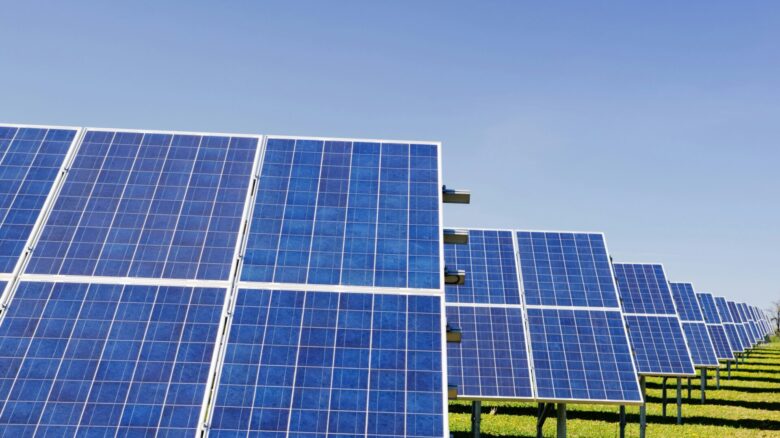
In the broad field of sustainable energy FEEM research addresses the environmental dimension of energy consumption and production and investigates the economics of energy policies, through the use of modeling and analytical tools. FEEM research focuses in particular on the economic analysis of externalities in the energy sector, of renewable energy sources (in particular bio-energy) and of the role of innovation in energy technologies.
Cities are the engines of creativity and innovation, so the urban system is the backbone of economic and social development. There is currently little understanding of the way globalization affects the fortunes of countries through its impact on the fortune of cities. The aim of this research topic is to contribute to filling this gap by devoting specific attention to the differential impact of cultural diversity and immigration on the economic life of global and local cities.
Research on water management is focused on decision and policy-making processes and their relationships with research developments. In particular FEEM researchers have developed a modular framework for managing participatory processes (PP) named NetSyMoD, "Network Analysis - Creative System Modeling - Decision Support", which has found a number of interesting applications in water management.